

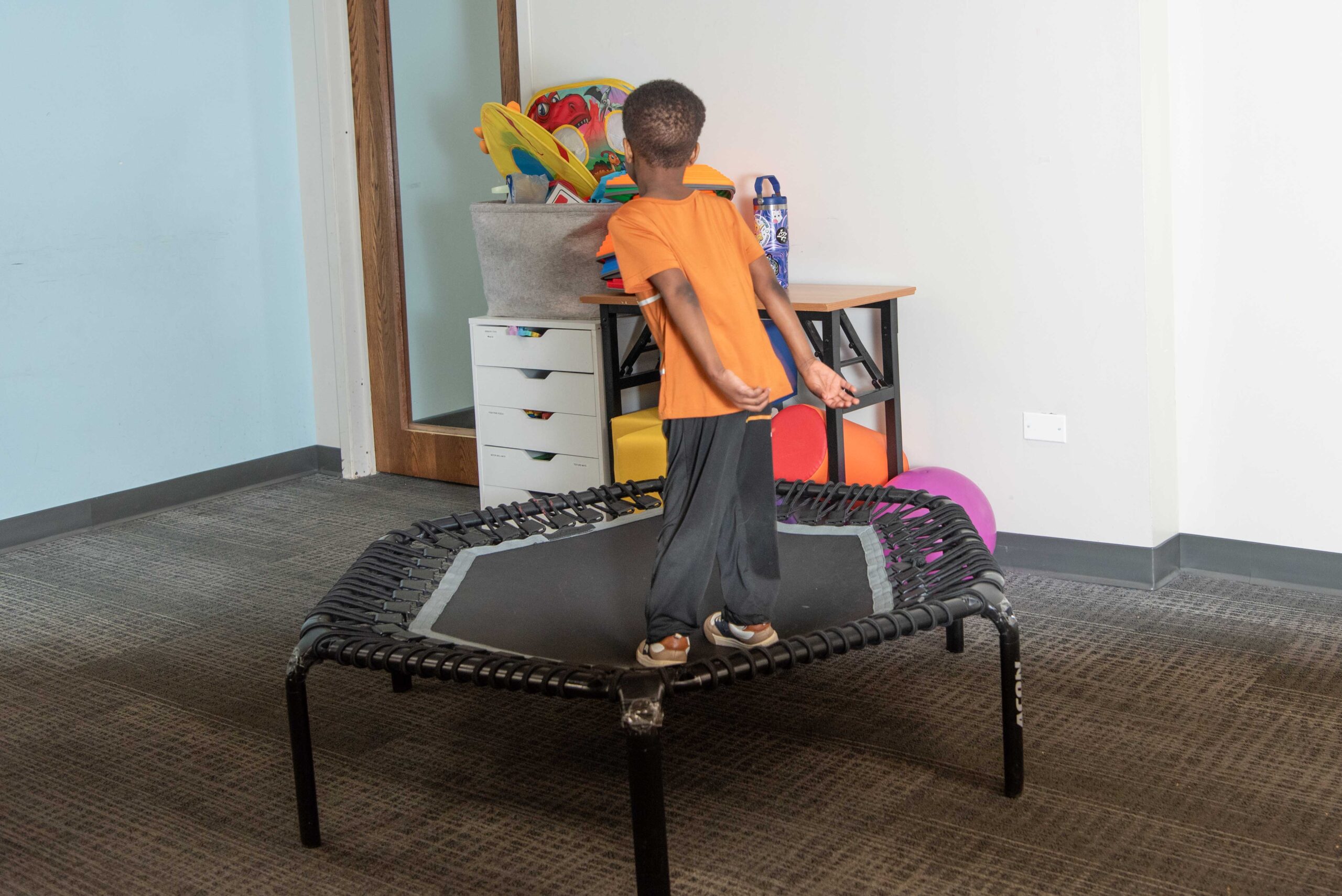
Social skills are essential for communication, relationships, and navigating everyday life. For many autistic children, these skills may not develop automatically and often require structured teaching and practice.
Social skills include much more than conversation. They involve understanding social cues, interpreting emotions, taking turns, sharing attention, and engaging appropriately with peers and adults.
Children may experience challenges such as difficulty initiating interactions, limited understanding of social rules, or trouble maintaining back-and-forth conversations. These differences can sometimes lead to frustration or social withdrawal.
ABA therapy addresses social skills by breaking them into teachable components. Instead of expecting a child to “just know” how to interact, skills are explicitly taught and practiced in structured and natural environments.
Common areas of focus include:
• Eye contact and joint attention (when appropriate and not forced)
• Turn-taking and sharing
• Conversation skills
• Understanding emotions in others
• Group participation skills
Therapists use modeling, role-play, reinforcement, and real-life practice to build confidence and fluency in social interactions. Over time, these skills are generalized to peer interactions, school settings, and community environments.
Parents can support social development by creating opportunities for interaction in low-pressure environments and reinforcing positive social attempts.
Q: What are social skills in autism therapy?
They include communication, interaction, emotional understanding, and peer engagement.
Q: Can social skills be taught?
Yes. Social skills are learned through structured teaching and practice.
Q: Why do autistic children struggle socially?
Due to differences in communication, sensory processing, and social interpretation.
Q: Does ABA therapy help with friendships?
Yes. It builds foundational skills needed for peer interaction and relationships.